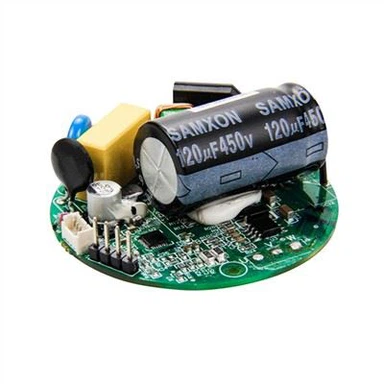


What precautions should be taken when wiring a servo drive board?
Sep 23, 2026
The servo drive board is the key control part in a servo control system. It is mainly responsible for receiving signals from controller and adjusting the servo motor's speed, position and torque according to preset parameters. Servo drive boards is widely used in automation equipment, CNC machine tools, industrial robots, packaging machinery, printing equipment, precision machining systems and other fields.
In actual installation process, the accuracy of the line directly affects the motor's operational stability and the safety of the entire control system. Problems such as incorrect power connections, reverse signalling, faulty grounding or interference with encoder wiring can trigger drive pad alarms, prevent motors from starting, lead to positioning errors and even damage to equipment.
Therefore, when wiring the servo drive board, it is necessary to follow the product specification and wiring diagram, and pay special attention to the following aspects:

1.Verify servo drive board and motor parameters before wiring
Before the actual cabling is performed, the compatibility of the servo drive board and the servo motor is first confirmed.
Pay close attention to motor type, rated voltage, rated current, rated power, encoder type and other parameters. If the drive board's output specifications does not match that of the motor, it may cause overflow, overheating or operational failure.
In addition, verify the power supply specification of the driver plate and controller interface type. Endpoint layouts and functional definitions vary from one driver board model to another; don't rely entirely on past experience when wiring.
2.Correctly distinguish between power lines and signal lines.
Servo drive boards typically involve various types of cabling, including power supply, output power, control signals, encoder feedback, and communication lines.
The cabling must be based on terminal marking, and it is particularly important to avoid connecting power lines to signal terminals. Power lines generally require sufficient current carrying capacity, while control lines are mainly used to transmit impulses, directions, enablers or communication signals.
Before installing, it is recommended to look carefully at the terminal definition and wiring diagram of the drive pad to verify the functionality of each line separately.
3.Make sure the motor power cord is connected correctly
The power cord connecting the servo drive board the servo motor transmits the driving current, so the quality of the connection is very important.
During cabling, verify the correspondence of the power lines at each stage and ensure the security of all terminal connections. Incorrect power cables connections can cause the motor to reverse, operate erratically and even trigger drive alarms.
For high-power servo systems, cables and connectors of appropriate specification must be selected based on the actual current and the terminals must provide safe mechanical fixation and reliable electrical contact.
4.Make sure encoder feedback cables is properly connected
The encoder is the key part to realize servo closed-loop control. It feeds motor position and speed information back to the servo drive board so that the system can adjust the motor's operating state in real time.
Therefore, special attention must be paid to the wiring of the encoder.
Different servo motors can utilize incremental encoders, absolute encoders, or other feedback devices, each with a distinct interface and signal definition. During cabling, verify that the encoder model, interface definition, and feedback protocol are compatible with the drive board.
Poor contact or incorrect wiring of encoder lines can lead to positioning errors, encoder alarms and motor wobble.
5. Perform anti-interference measures to control signal cables
Servo drive boards are usually interfaced with PLC, motion controllers, or host. Common control signals include pulse signals, directional signals, enable signals and alarm signals.
Since servo motors produces electromagnetic interference during operation, control signal cables should be kept at a reasonable distance from power cables to avoid running parallel for a long time.
For equipment with high control accuracy, the shielding cable specified in the system design shall be used and the shielding shall be grounded according to the manufacturer's requirements in order to minimize the impact of external interference on control signals.
6. Ensure reliable grounding
Correct grounding is a key step in installing servo drive systems.
Effective grounding can not only improve operating stability, but also reduce safety risks caused by electromagnetic interference and leakage.
the servo drive board, servo motor and related equipment shall be grounded in a manner consistent with product manuals and electrical design specifications. Grounding connections must be strong, avoid loosening, poor contact or contact resistance, etc..
7. Disconnect power before connecting
Servo drive boards is an electronic control devices that must be cut off during installation and maintenance.
Before connecting or disconnecting power cables, motor cables, or encoder cables, verify that the system is powered down and allow sufficient discharge time as required by the equipment. Some drive systems contain internal energy storage elements; a power outage does not necessarily mean there is no residual voltage inside.
Therefore, it is not recommended to connect or disconnect cables when the device is electrified.
8. Where possible, separate power cables and signal cables
Servo systems generally consist of high power lines and low level control signal lines. Getting the two lines too close increases the risk of electromagnetic interference.
In installation process, the power cable, encoder cable and signal cable are controlled by logical grouping according to the equipment structure, so as to avoid long distance parallel operation.
Proper cable layout is the key to minimize signal interference and improve system stability, especially in high-speed and high precision motion control equipment.
9. After wiring is complete, check and test.
Do not switch to high speed immediately after completing all wiring connections.
First, verify the power supply, power cord, encoder cables, control signal cord, and ground connection according to the wiring wiring diagram to make sure there are no loose, short, or incorrect connections.
Secondly, low speed or emptyload test was conducted to observe the starting, stopping, rotation direction and feedback state of servo motor. If the drive pad triggers an alarm, read the alarm information and troubleshoot the cause; do not repeatedly force the device to start.
X. Do not apply the same wiring method for different drive plate models
Note that even if two servo drives look similar, their terminal definitions and control methods may be different.
Therefore, when replacing a servo drive board, do not simply copy the wiring colors or terminal position of the old unit. Instead, see the official wiring diagram and technical manual for the new drive pad.
The compatibility of the new drive board with the existing servo motor, encoders, PLC and communication systems is also required for equipment retrofit projects.
Conclusion:
Servo drive board wiring may seem simple, but it involves multiple components --including power supply, power supply, feedback, control and communication. Correct wiring is the foundation of stable operation of a servo system.
In actual installation process, the key links such as parameter matching, power cable connections, encoder feedback, control signals, grounding, interference prevention and power outage safety are paid close attention to. Always follow the specific model of the product manual and wiring diagram. Equipment manufacturers, automation integrators and procurement personnel should exceed price and rating specifications when selecting servo drive panels. It is also important to verify that the vendor has provided comprehensive wiring diagrams, technical documentation and aftermarket support to minimize risks during installation and commissioning.
Frequently Asked Questions
1. What preparations do the servo drive board need to be made before wiring?
You will need to verify the servo drive board model, servo motor model, rated voltage, current, power, encoder type and control method, and prepare the corresponding wiring diagram and technical documentation.
2. Can servo drive plates be wired?
This is not recommended. Before connecting or disconnecting a power supply, motor power cables or encoder cables, the power supply must be disconnected in accordance with equipment safety protocols and any internal energy storage element must be discharged safely.
3. What are the consequences of incorrect encoder wiring?
It may lead to encoder alarms, position feedback anomaly, motor wobble, inaccurate positioning or the servo system failure.