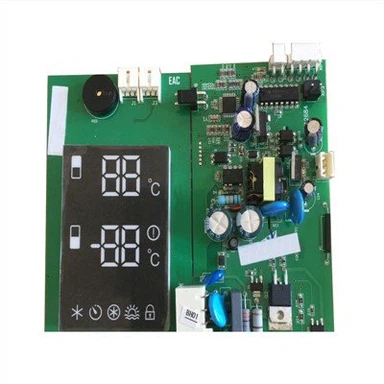


What is an AI voice module for smart toys, and what are its key components?
Nov 06, 2026
The AI voice module of Smart Toys is an electronic component which combines speech capture, speech recognition, command processing, speech output and so on, and is mainly used for voice interaction in smart toys. Through the module, the toy can recognize a a user's voice commands, play audio content and provide appropriate responses based on pre-programmed logic or artificial intelligence systems. For smart toy manufacturers, choosing the right AI voice module not only enhances the interactive experience, but also simplifies the development of electronic systems and shortens the product R&D cycle. As a supplier of such modules, understanding their core components and operating principles helps customers make informed choices based on the expected functionality, physical dimensions, and specific development requirements of the toy.
1.What is an AI voice module for smart toys?
The Smart Toy AI voice module is a voice processing component specifically designed for interactive toys, companion robots, educational toys and smart products for children.
Unlike traditional speech modules,which are limited to playing pre-recorded audio or performing simple fixed voice commands,some AI speech modules use speech recognition, natural language processing and cloud-based AI services to provide a more flexible and dynamic interactive experience.
For example, if a child says "Tell me a story" to a smart toy, the module can recognize the request and trigger a playback of the story-either through local programming or by connecting to an artificial intelligence system. Among products that support AI-driven dialogue, the module can even generate specific responses a user's questions.
It is important to note that AI functions vary from module to module. Some products only support offline speech recognition and responses to a set of fixed commands, while others offer cloud connectivity for more complex natural language interactions.
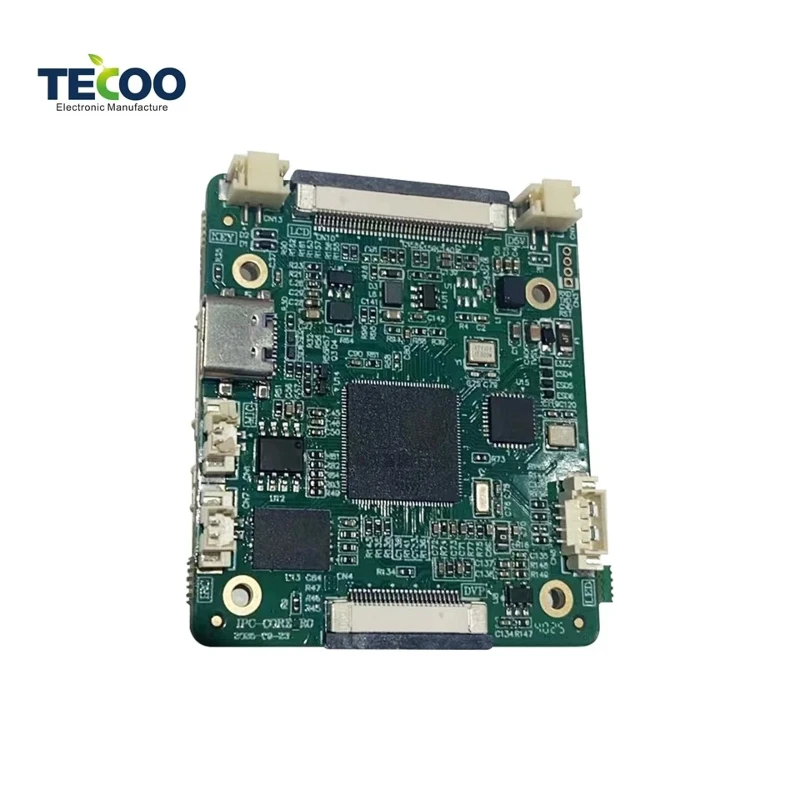
2.What are the core components of the AI voice module for smart toys?
The AI voice module of smart toy is usually composed of several electronic components and functional units. The configuration depends on the product design, the chosen voice interaction mode and performance requirement.
2.1 Microphones and Voice Capture Units
Microphones are the main component of the AI voice module to receive user voice. It converts sound waves into electrical signals, providing the necessary input for subsequent speech recognition.
In the field of smart toys, microphone sensitivity, signal-to-noise ratio, pickup range and other factors directly affect the quality of voice capture.
For toys used in environments where children are active, manufacturers must carefully consider factors such as background noise, the distance the user speaks and how the toy's internal structure affects sound collection. Some modules support single microphone configurations, while others are designed with multiple microphones to improve sound acquisition in specific environments.
2.2 Master or voice processing chips
The control chip is the main processing unit of AI voice module in smart toys. It performs voice recognition algorithms, resolves commands, manages control logic, and processes related data processing tasks.
Depending on the module structure, the system can employ a dedicated voice processing chip, an MCU (microcontroller unit, or a processor with high computing power.
The performance of the control chip usually affects the speech response speed, the number of support commands, the efficiency algorithm execution and the module's power consumption.
Low-power voice-processing solutions may be enough for toys that require quick responses to simple commands, but intelligent robots designed for complex interactions or multitasking require more computing power.
2.3 Voice recognition and AI Algorithm Unit
Speech recognition is the core technology of intelligent toy voice interaction.
This is usually achieved through a combination of software algorithms and processing chip that convert captured audio into recognizable commands or text.
Depending on the product design, the voice module can support:
-Keyword wake-up (e.g., "Hello, robot").
• Identify fixed voice commands (e.g. "Go ahead", "Play music").
-Offline voice recognition, no continuous network connection required.
-Online voice recognition, using cloud services to process more complex language content.
_ Artificial intelligence-driven conversational capabilities for natural language interaction through external AI systems.
Toy manufacturers should test specific voice recognition capabilities supported by modules based on their actual functionality, rather than just assuming performance based on the word "AI" in the product name.
2.4 Audio Output and Power Amplification Unit
The audio output unit converts processed voice content into sound, allowing the toy to provide audio feedback.
This component typically includes audio decoding, power amplification circuits, and speaker interface. Some modules use integrated audio power amplifier, while others require external amplifiers or speaker driver circuits.
Key parameters to consider when selecting modules include output power, supported audio format, speaker impedance, and sound clarity. For compact smart toys, a properly configured audio output ensures clear voice playback in a limited space while controlling total power consumption.
2.5 Storage Devices
Storage units are used to store speech models, recognition commands, audio files, program code, and other operational data.
According to the module design, storage can consist of internal Flash, RAM, or external memory chips.
Storage capacity determines the amount of voice content that can be saved, the size of the recognition models supported, and the space available for firmware/program updates.
If a smart toy intends to play a large number of stories, songs, or interactive sound effects, the manufacturer should verify the module's storage configuration and expansion capabilities in advance.
2.6 Communication Interface Unit
Communication interfaces facilitates data exchange between AI the AI voice module and the toy's main control board, sensors and other electronic components.
Common interfaces include UART, I2C, SPI, USB, and GPIO, depending on the module's specific hardware design.
Through these interfaces, the voice module can transmit recognition results to the master control chip and receive playback or control commands from the master system.
For OEM and ODM toy manufacturers, interface compatibility is a key factor to be identified during module integration.
2.7 Power Management Unit
power management unit provides a stable operating voltage for the functional components in the module and adjusts power consumption according to design requirements.
Because smart toys are typically battery-powered, the efficiency of power management has a direct impact on battery life and overall user experience.
Key parameters to consider when selecting an AI voice module include operating voltage, backup power consumption, active power consumption, and power interface requirements.
Low-power wake design is especially important for companion toys that require long standby times.
3. How do AI voice modules in smart toys voice interaction?
Artificial intelligence voice modules in smart toys typically follow this process to complete voice interaction:
1. Users speak and microphones capture audio signals.
2. The module detects wake-up words or receives voice input.
3. The voice processing chip processes the input signal.
4. Speech recognition algorithms extract commands or transcribe speech into text.
V. The module sends the identification results to a local control program or an external artificial intelligence system. The system generates a response based on the recognition results.
7. Audio output device plays sound response.
For smart toys that support cloud-based AI interactions, recognition results or audio data may require transmission to an external system via Wi-Fi, Bluetooth or other means of communication. Specific data processing methods depend on product structure and module configuration.
4. What are the technical parameters to consider when selecting an AI voice module for a smart toy?
For toy manufacturers and electronics purchasers, choosing a module requires more than just voice functionality, it necessitates a thorough evaluation based on actual product design.
Key factors to consider include:
Voice recognition method: Determine if it supports offline, online or hybrid recognition.
Language support: Verify support for English, Chinese, or other languages according to the target market.
-Interface type: Ensure compatibility with the toy's main control board (e.g., UART, I2C or other interfaces).
Audio output: Assess output capabilities according to speaker specifications and audio requirements.
Power consumption: Active and standby power consumption are assessed based on battery capacity and expected battery life.
Module size: Ensure PCB size, installation space and structural design meet the toy's requirements.
-AI capabilities: Clarify whether the module supports natural language conversation, cloud connectivity or third-party AI platforms.
Development support: Check the availability and quality of SDK, development tools, technical documentation, and customization services.
For practical projects, sample testing is recommended prior to bulk purchasing to verify the compatibility of the module with the physical structure, audio system and control software of the toy.
5. What products are suitable for AI voice modules in smart toys?
Smart Toys' AI voice module can be used in a variety of interactive products, including:
_ Artificial intelligence assisted toys for children: Realizing everyday conversation, storytelling, and emotional interaction.
Educate smart toys: Support vocabulary learning, quizzes and phoneticallyguided instruction.
Intelligent robots: Facilitate voice control, motion triggers and interactive feedback.
-Interactive stuffed animals: add voice chat, music playback and storytelling.
-Smart PlayStation: Supports voice commands, in-game prompts and interactive sound effects.
-Children's learning devices: voice input, content playback and learning aids are available. Different products have different requirements for module size, power consumption, interface and voice capabilities, so the configuration must be customized according to specific application scenarios.
6. How should OEM and ODM manufacturers choose the right AI voice module supplier?
For OEM and ODM manufacturers of smart toys, voice module vendors provide not only hardware but also technical support and product development capabilities.
In the supplier evaluation process, the following aspects are taken into account:
--Artificial Intelligence voice module with diverse specifications and features.
-Supports customization of voice features, interfaces and hardware configurations.
Provision of development committees, sustainable development knowledge and related technical papers.
Support sample testing and product integration verification.
Stable production capacity and quality control processes.
-Be able to meet large procurement and delivery requirements.
If the project involves specific languages, fixed wakewords, proprietary voice content, or unique interaction logic, it is important to clarify with the vendor in advance the scope, development schedule, and associated costs of custom development.
FAQ: AI Voice Modules for Smart Toys
Q1: Does AI voice module of smart toy need a network connection?
Not necessarily. Modules that support offline voice recognition can perform preset commands without an internet connection; however, complex AI-driven conversations often require connectivity to cloud services or sufficient local computing power.
Q2: Can AI voice modules for smart toys support multiple languages?
Yes. ' Some modules support multilingual recognition or voice output. The specific languages supported and the switching between them and the accuracy of identification depend on the product model.
Q3: Can AI voice modules for smart toys be customised?
Yes. ' Some vendors offer interface customization, wake-up words, voice commands, audio content and hardware specifications based on modular platforms and project requirements.
Q4: Will the power consumption of the AI voice module affect a toy's battery life?
Yes. ' Continuous listening, voice processing, wireless communication and audio playback all consume energy. Choosing low-power solutions and optimizing standby mode can help extend battery life.